Letter from Judy to Jane & Malcolm 15 Dec 1976 –
This is our longest holiday – mid-November to mid-January and we have already had a marvellous 2 weeks basking beside the Indian Ocean. We spent the first week at the school cottage near Mombasa and then camped about 60 miles further north at one of the Marine National Parks which was a pretty near perfect site under coconut palms and a few yards from the usual tropical beach and sea and made even better by the fact that we were the only people there until the last day.
Letter from Judy to Lisbeth & Peter 15 Dec 1976 –
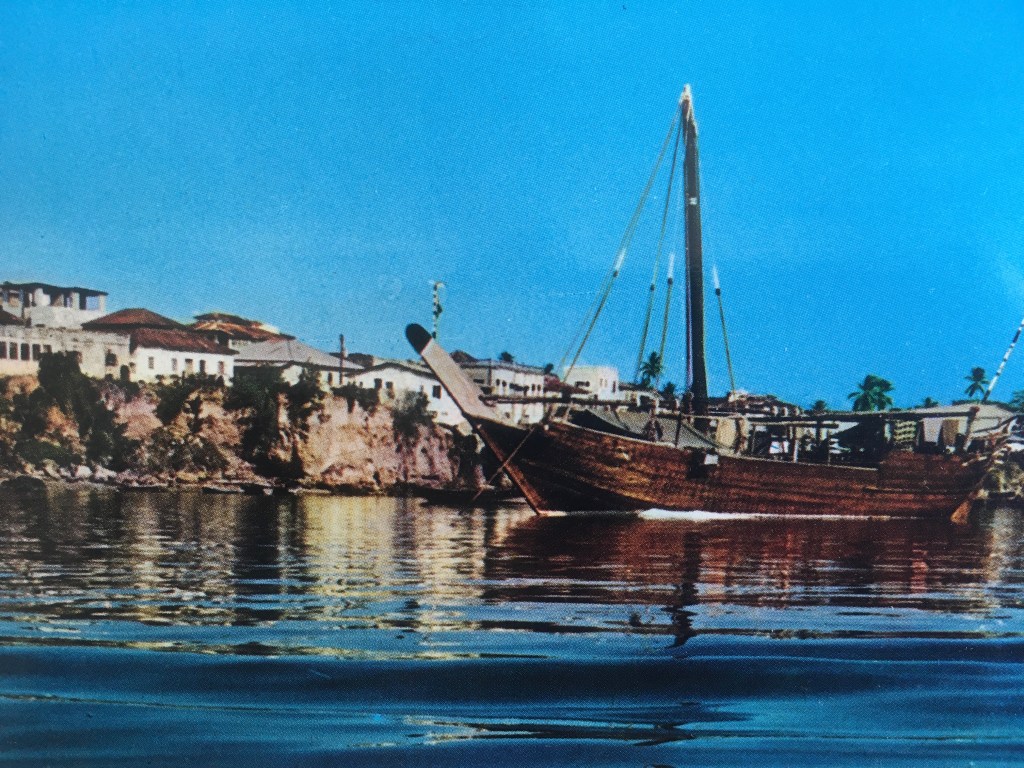
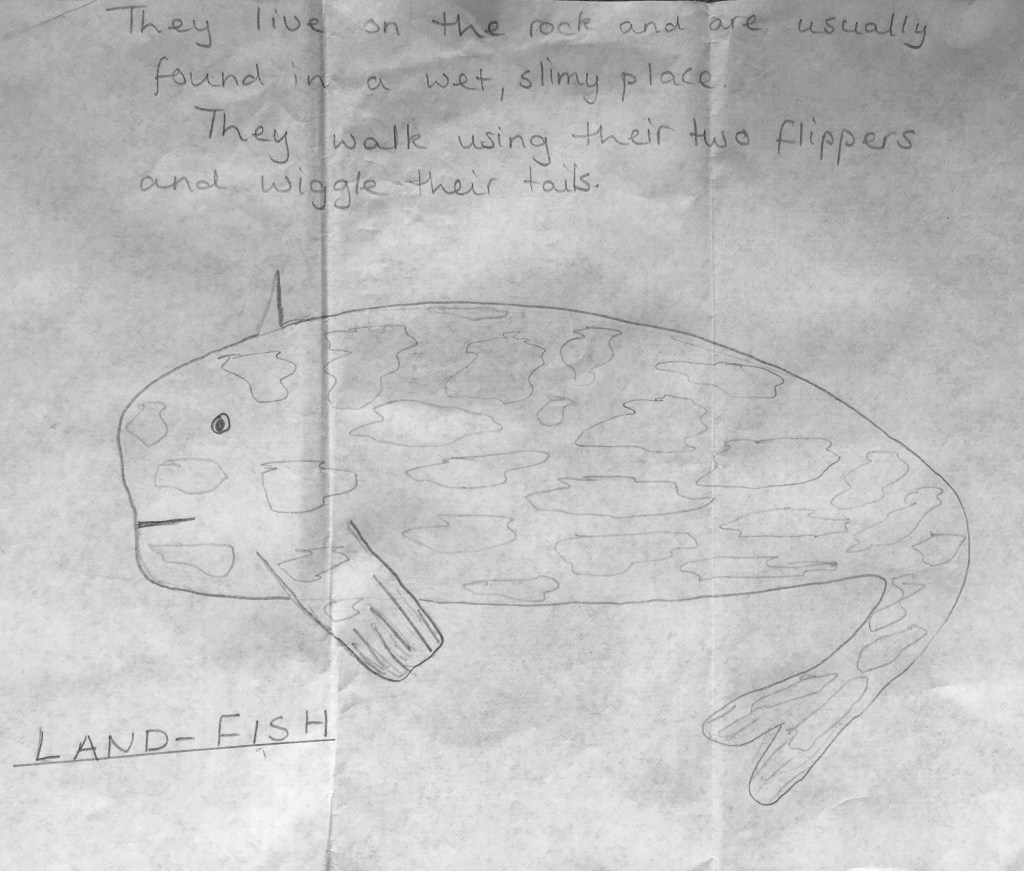
We have just got back from a two week holiday at the coast and find the cold of Kikuyu quite unpleasant so are glad to be going to warmer parts again quickly ! We had a marvellous time at the coast – the children spent hours in the water and even Fiona became quite confident about swimming out of her depth for long periods. The sea is marvellous, very warm and completely clear and smooth inside the coral reef and exciting breakers on the reef itself if one wants a change. Walking on the reef at low tide we were able to see many fish and marine creatures on the pools and rock crevices. We saw something we called ‘land fish’ – 2-4″ long which looked just like fish but lived on the rocks and walked on their two front fins, and an immense variety of crabs. For the second week of our stay we were camping at Watamu which is a Marine National Park, one of several started in an attempt to preserve the reef life which in the main tourist areas near Mombasa is rapidly being ‘collected’ away. We thought you might like the picture of the Arabian dhow. We visited the old harbour at Mombasa where you can still see the dhows which make the crossing from Arabia at the times of year when the wind is right. They are still used commercially but in quite small numbers now. The local fishermen use a smaller version and this is still almost the only form of local boat seen in the reef areas – presumably the fisherman can’t afford an engine and fuel anyway. The only motor boats are the ones used for deep sea fishing by the tourist set-ups.
Letter from Judy to Caroline, Martin, Daniel and Cripplecat 15 Dec 1976 –
The beach at Watamu is superb and broken up by all these rocky islands and headlands which makes it very interesting for paddling and pottering. We saw far more marine life than elsewhere. Our trip to Mombasa wasn’t quite without incident as the van started spraying out oil in all directions just past Hunter’s Lodge and we had to return to Nairobi for Graham to fit new piston rings. I took the children down on the train to Mombasa next day unwittingly causing great excitement on the compound as the train was announced to have fallen off an embankment during the night. Fred Williams was called upon to drag Graham out of bed and tell him the sad news next morning and Hugh Lewis drove him down to the station only to discover that it was the Mombasa to Nairobi train which crossed the embankment (or rather didn’t) some two hours after our train. Graham is not prone to worry about anything until absolutely necessary – I think everyone else was in more of a stew than him, and of course I didn’t know anything about it until Graham got down to the cottage three days later.
Graham and Judy (in 2020) found archive footage from AP Television about the train crash which has a transcript of the commentary of the film footage: “The accident happened at 0220 hours local time on Monday, near the main line station of Voi some 200 miles (320km) south-east of Nairobi, as the overnight express was travelling to the capital from the Indian Ocean port of Mombasa. Several coaches jack-knifed off the rails at the Ngainethia rail bridge, which had been undermined by sudden floods, and one coach was almost completely submerged by flood waters and mud. The area is “big game” country, and floods had also stranded many tourists in their vehicles. Several tourists were in fact feared drowned in the floods. In addition to the 11 bodies recovered, nearly 100 people were injured in the crash and had to receive medical attention. Rescue teams came to the scene from both Nairobi and Mombasa, and clearing operations are expected to last for several days yet. – see http://www.aparchive.com/metadata/KENYA-TRAIN-CRASH/a047161c0bcd0e4373e4703f1386edac
Letter from Helen to Grandma & Grandad Dec 1976 –
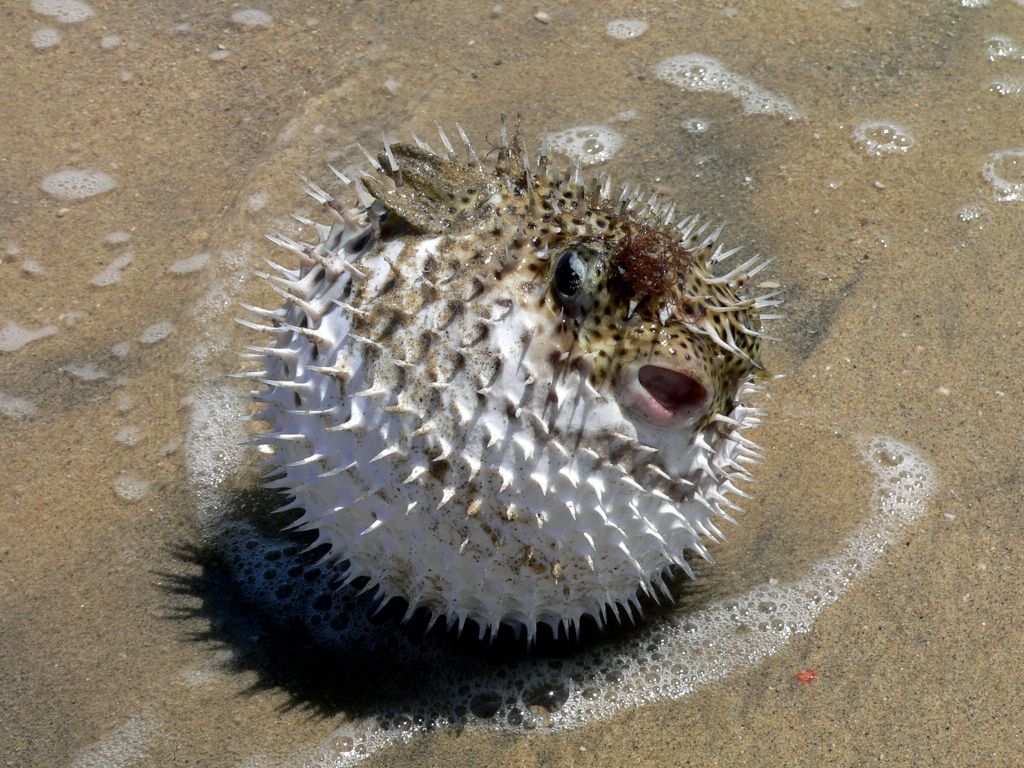
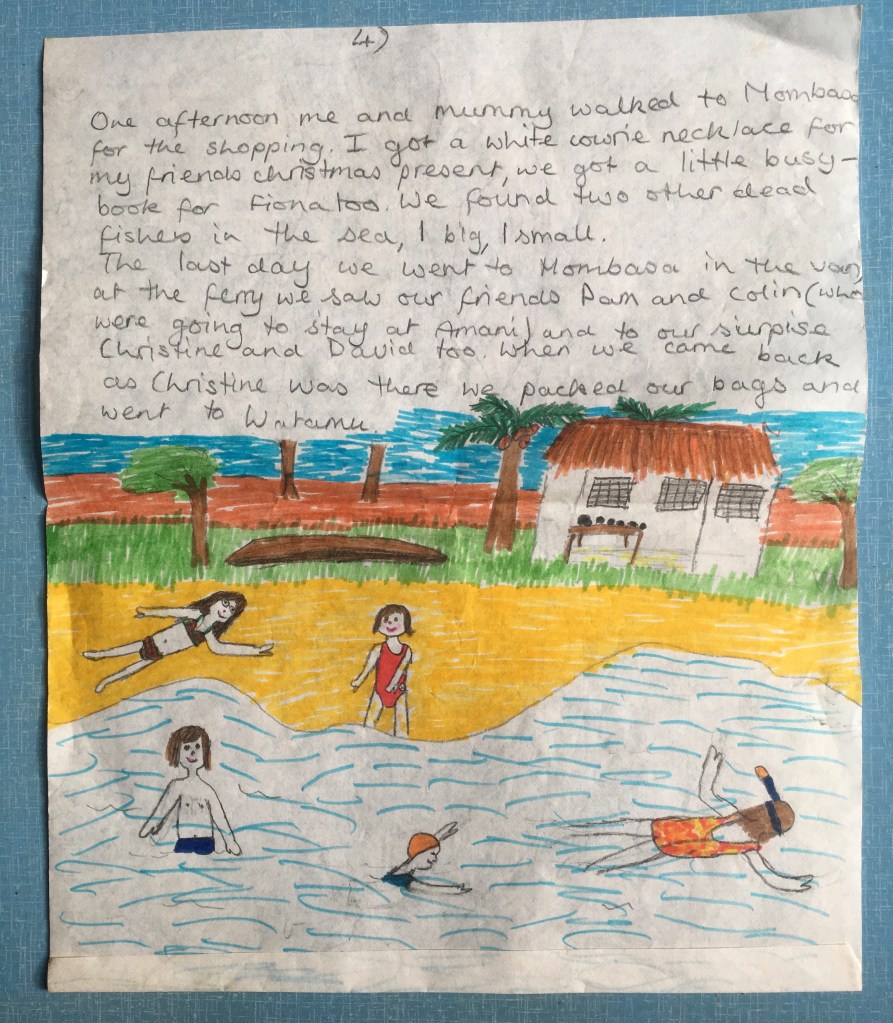
It was the 26th of November when we set off on our long journey to Mombasa. We had gone a 100 miles when Dad turned the van around because the van wasn’t going properly. We were very disappointed, but on the way back through Nairobi we went to the station to buy tickets. The plan was that me, Mummy, Fiona and Juliet should go on the train and Dad should try to get the new parts. The train only went at night so we had to wait another day. At 4 o’clock the next day we got a lift with our friends to the station and waited in the train until it was time to go. When we had passed the industrial area we ate our sandwiches. Our carriage was very nice – there were two seats with backs that hooked up for bunks and a sink with new soap and a mirror. A man came round, later, with blankets but we had to pay 10/- for them (10/- = about 70p). In the morning we looked outside at the beautiful country and about half past eight we came to Mombasa Station. We got a taxi to the Castle Hotel and got a drink each. We then got a bus to Likoni Ferry and went across the mouth of Kilindini harbour where all the big ships go in. At the other side we got some fruit. Then we started on our long 2 mile walk. It does not sound very far but with heavy rucksacks and the sticky heat it was hard going. By the time we got to Amani Cottage it was lunchtime and we were sweating so much that we just got our costumes on and swam in the sea. We stayed 7 days at Amani Cottage swimming, getting sunburnt and just playing. We found thousands of cowries and other shells too but when we went to Watamu we left nearly all of them behind. The first few days we did nothing but swim and enjoy the sunshine. The third day Dad came with the van – he hooted loudly ! The next day we went along to our swimming place and we saw a dead turtle. It’s head was off and you could see it’s vertebrae. Out of both sides blood was dripping out into little pools and the shell was flaky. We guessed it’s head had been battered off. We made a big castle the next day at high tide and just about when the sea was up to it Juliet saw a spiky thing floating in the water. We went to look at it and Juliet said it was a fish. At first I didn’t believe her but it was true it was a fish. Later on we found out that when they have been dead a long time they puff up into the shape of a ball.
Letter from Juliet to Grandma & Grandad Dec 1976 –
This is just a short note to say I hope you are well and have a very happy Christmas. The following is a journal of the first part of our stay at the coast. Helen will tell you the rest with a letter from Fiona too.
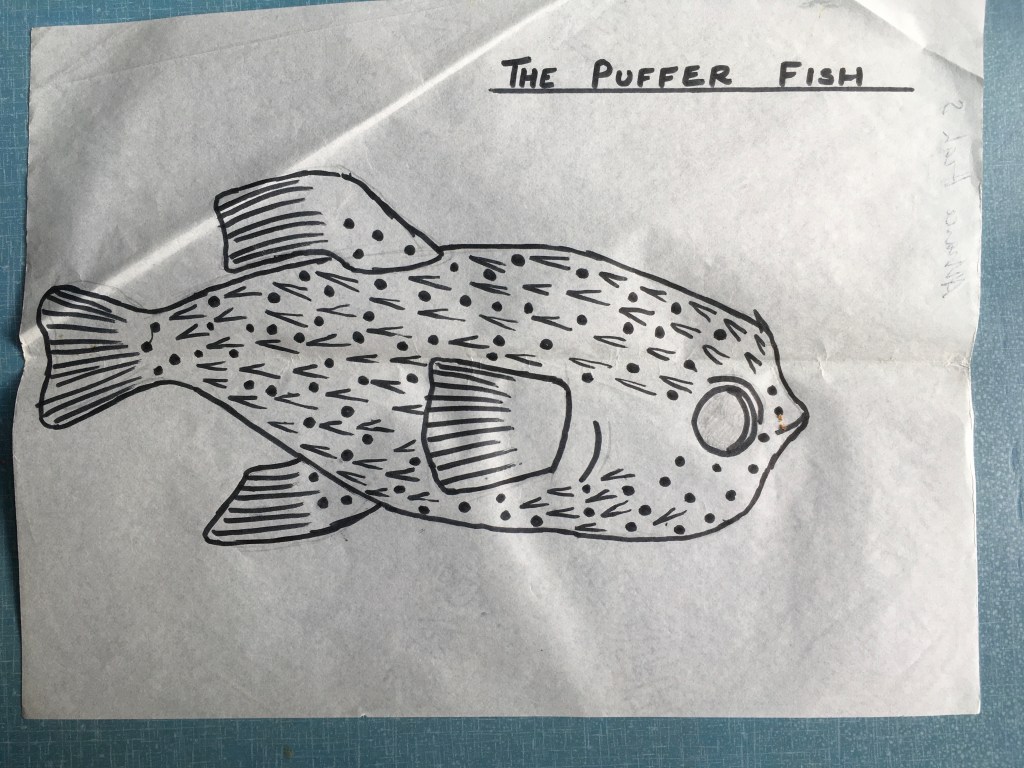
We left quite early on the morning of Saturday two weeks ago. The sun was only just appearing mistily above the rain clouds, struggling its way through and up into the sky. It was a fresh morning with the smell of rain and dew coming up from the earth. Most of our luggage was ready to be put into the van so we ate our breakfast first and packed afterwards. We had soon got the van organised and ourselves comfortable and so we set off on the long journey of about 300 miles to Mombasa. Soon we had passed through all the well-known areas of Dagoretti, Riara Road and Adams Arcade, all of which are very well-known to us. About an hour later we were in the industrial area of Nairobi which is a dirty, crowded area. There are lots of warehouses, scrap merchants and car-dealers and dirty roads with pieces of metal and paper littering the place. It was not a very pleasant area but soon we were passed it and heading out into the open plains. We passed an enormous Drive-In screen, some large Firestone factories and went over a bridge. Close to the road was the railway line that would be in sight of the road nearly all the way to Mombasa. Past the railway, in the distance, we could see Nairobi Game Park fences and large herds of skinny, hump-backed Maasai cattle roaming on the sparse brown grass searching for food. Occasionally we would see a few lone wildebeeste or kongoni or a herd of small deer. The road was very straight and smooth and the countryside rather boring with its rolling brown plains, few scrawny acacia trees and sometimes brightly coloured birds twittering to themselves. It was obvious there was very little water because of the brown grass and dead cows and goats littering the ground. From Nairobi to Hunters Lodge we counted about 70 dead animals. As we continued the landscape began to change. We passed the Lukenya Hills as I’ve no doubt you have heard about and on into hilly land. Here the grass was no better but there were more trees. By this time it was beginning to get hot although we had passed through a shower of rain. We decided to stop at Hunters Lodge, a pleasant hotel about 100 miles from Nairobi. This was so we could have a drink and Daddy wanted to fix the van because something was wrong. The Lodge was set by a river that ran through a small lake. It was in a lovely cool, green place with doves, sunbirds and peacocks showing themselves off. There was a bar and seats to sit on outside, displays of shells, stamps and rocks from Kenya, and a bridge across the still lake from where we could see hundreds of silver fish. We stopped here for quite a long while for Daddy to mend the van and then drove on. We had only gone a little way when Daddy turned the van around and said “we are going back”. So back we went, all the way to Nairobi. Apparently the van could stop at any minute and it would be best to go back 100 miles to Nairobi rather than try 200 miles to Mombasa. We were very disappointed but on the way home we stopped at the station to enquire about trains to Mombasa. One train (passenger) left Nairobi each day at 6pm and got to Mombasa at 8:30am the next morning. We couldn’t go that night because it was already 4:30pm so we bought tickets for the next day train. It was arranged that Mummy would take us three down on the train while Daddy stayed to do the van and would follow on later. We spent all Sunday morning getting our rucksacks ready because we would have to get a taxi or walk to the bus-stop then get a bus to the ferry and walk the rest of the way. We were driven to the station by our friends Tom & Myrtle Stevenson and their three children, and us and another person totalling ten people altogether in an estate car ! The station was very busy with steam trains shunting up and down and the long Mombasa train waiting. There was music playing to add to the noise. Unlike English stations, we had to go to a board and look on a list where it would tell us our carriage number. We were in a second class carriage. We got in long before the train was to go and explored our compartment. We had a room of our own that had space for four people. It had a small sink with a let-down table over it. At the windows were wooden shutters, a glass window and a mosquito net window. Our compartment was next to the toilet which was convenient. At 6:30pm our train left Nairobi and by the time we got to the Firestone factories it was getting dark. About half an hour later a man came round with a glockenspiel on which he played a tune – this meant that the buffet car was now serving supper. We had brought sandwiches so we ate those. Later a man whom we call the ‘blankiti’ man came. We called him this because he asked us in Swahili do we want any blankets and blanket in Swahili is blankiti. We ordered 4 blankets and he entered carrying four huge sacks. He showed us how to raise the backs of the seats to form bunk beds. On the edge of the top bunks were kind of nets to stop us from rolling out. In the sacks were two lovely soft sheets, two thick warm blankets, two pillows and a clean towel. By now it was dark and we were eager to go to bed. Fiona and Mummy slept on the lower bunks while Helen and I slept on top. We were soon asleep in our comfortable beds (we didn’t use all the blankets!) and I slept right through the night waking occasionally to pull up the sheets. We all awoke at dawn which was about 6:30am and got our beds put away. The blankiti man came and collected our blankets and took them away. We were charged 10/- for each blanket pack so Mummy said we would have biscuits and bananas for breakfast instead of going to the buffet car. The landscape around us was quite different from the night before scenes. It was very dense bush that was incredibly green and lush but the strange thing was that there was no grass, or practically none. The ground was very hard packed red soil that looked as if it couldn’t grow anything. There were only a few baobabs to be seen as now we had passed the main baobab area but as we drew into Mombasa we saw lots of coconut palms and banana trees. It grew noticeably hotter as we drew into Mombasa which was not surprising as we had gone down about 5,500 ft ! The train arrived in Mombasa station at 8:30am and the minute we got off the train we were surrounded by passengers, porters and taxi drivers. Mummy found a taxi man that was asking a reasonable price so we walked to his car which was a new, clean looking car and got in. We were taken to the Castle Hotel which was a large, old fashioned, pleasant hotel. It was very quiet there and we all had a drink before we set off to the bus stop. At the bus stop we had to wait for quite a long time but luckily it was in the shade and there was a wall to sit on, so we took off our heavy rucksacks and waited for our bus. The bus took us to Likoni Ferry. There were usually two ferries (car and passenger) but that day there was only one but there was plenty of room for us. The ferry was quite large and had a single deck for cars and at the edges were double decks for passengers. It did not take us very long to get across on the ferry. Then began the long walk to Amani Cottage. It was very hot but we started off as soon as Mummy had bought some fruit. We walked slowly but steadily along the sandy beach road and halfway along the road was a small cove in which we stopped and paddled. Amani Cottage belongs to the school and is a small, well furnished, white bungalow set about 10ft from the sandy beach. Behind it is an area of sandy soil with lots of palm trees and in front is a patch of grass with two trees which spread their cool shade on the ground. There is an old log canoe that has sat there with a hole in its fore for many a year. We soon came in sight of the cottage but when we arrived there we couldn’t find the caretaker who had the key. We asked some men ‘Wapi Manau?’ or ‘Where is Manau?’. They said he had gone to Likoni Post Office and wouldn’t be back until after lunch so we sat down to wait on the large veranda. About 10 minutes later one of the men we had asked turned up with a key. He told us someone was looking after it for Manau while he was in Likoni. Almost immediately after we got into the house we got changed and went for a swim. The beach had a small amount of seaweed and stretched for a long way. Directly in front of the house the sand led down to rock pools which were exposed when the tide was out. If we walked out past these into knee deep water we would come to lagoons. These were clear, deep pools. Further out was the coral reef where the waves pounded down through day and night. About 100 yards along the beach towards Mombasa was a stretch of water with a sandy bed which was very pleasant to swim in. Even at low tide there was water there. One morning we walked along there and saw a dead turtle. It was very large – about 3ft long and 2ft wide. In the afternoon I saw some dogs at it pulling out the intestines which looked like extremely tough, leathery ropes. Next day when we walked along the beach it was gone. I suspected that the tide took it out to sea again. We would often go out at low tide to the pools. In these pools we could see lots of hermit crabs ranging from about half a centimetre to five centimetres in length. Their shells were often very brightly coloured, yet well-camouflaged. There were lots of different seaweeds; red, brown, green and yellow, all with different shape leaves. One day we were looking in these pools as the tide was coming in and I saw a hedgehog like thing. I used a stick to pick it up and saw that it was a fish. It had a beak-like mouth, a large blue eye and it was covered in spines, the longest of which was 3 cms. Later in the holiday we found out that they are called puffer fish.
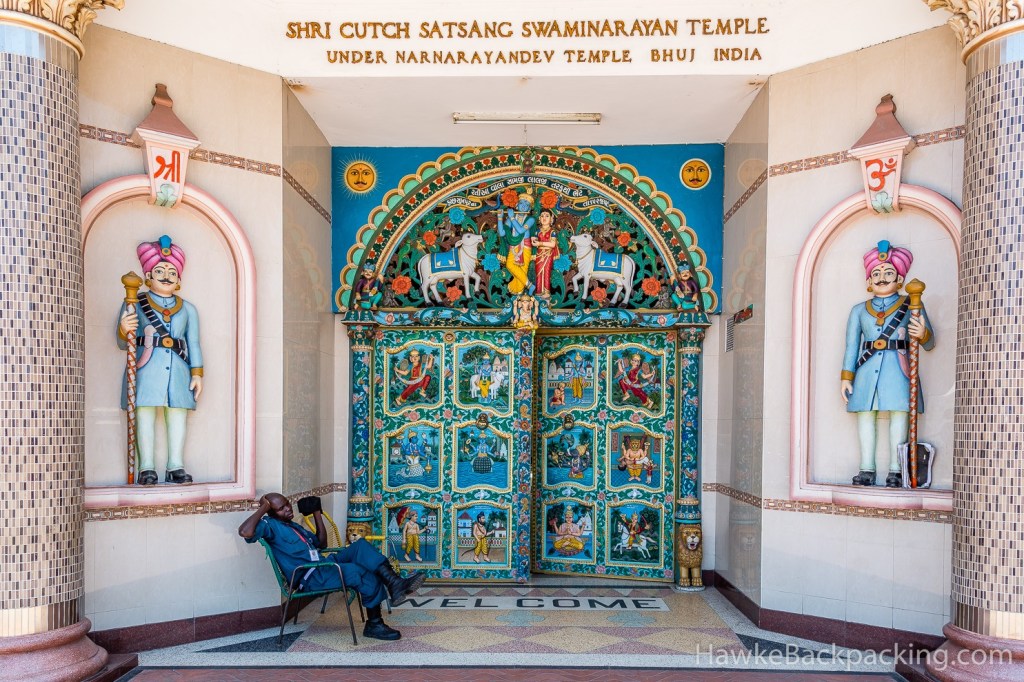
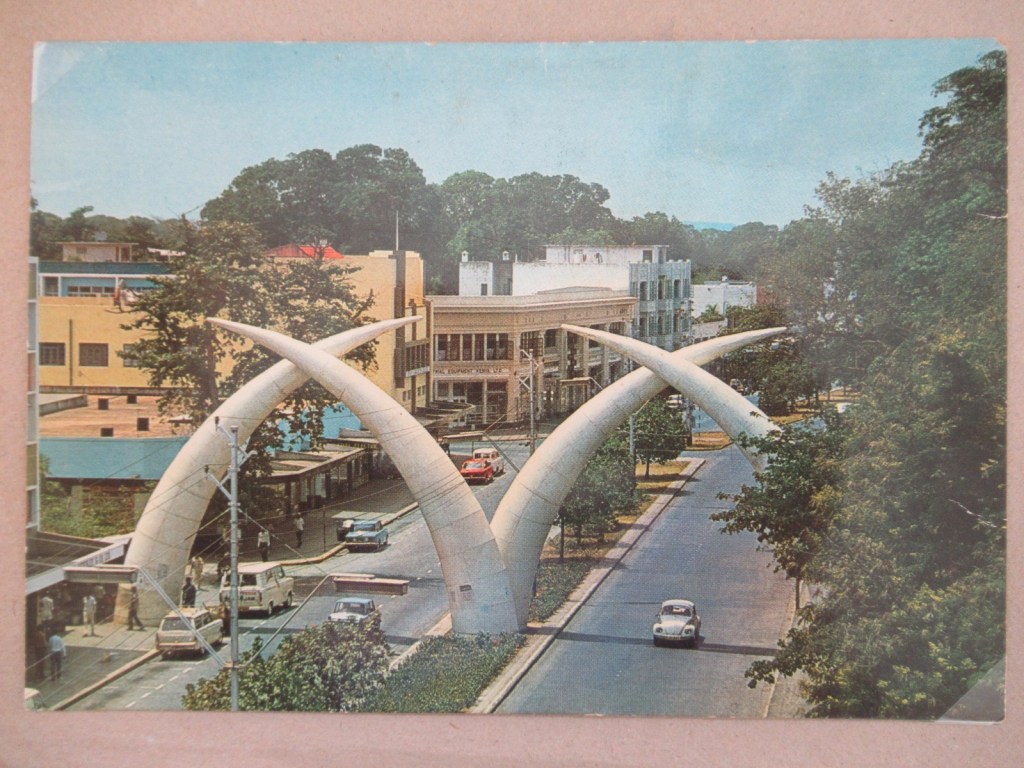
Three days later Daddy arrived which was good because we could then go into Mombasa. We went on the last day at Amani Cottage. Mummy went to do the food shopping while we went with Daddy. We passed by a Hindu temple called Swami Narayan temple that had a beautiful hand carved door with paintings on. We were just looking at these when the caretaker invited us in. We were taken through their many prayer halls to look at their lovely paintings from many of their stories. On the way in we had to take our shoes off and Fiona thought this was very strange. On the way out we passed a man reading what we thought was a holy book. Daddy said to him that the temple was very beautiful and the man went and got two pieces of cake. It was very spicy and a strange, sweet taste but rather nice. Mummy took us through the thin, windy, crowded roads of Old Mombasa town to see the old harbour. We saw lots of old houses with balconies and carved doors. In the harbour there were some large colourful dhows.
Helen’s description sent to Grandma & Grandad Dec 1976 –
Watamu first of all is a campsite which is spotted in Turtle Bay next to Watamu Bay. There are palm trees all around which make lovely shade. We thought somebody had started a hotel because there were old buildings everywhere. The beach was much better than at Amani Cottage because there was no seaweed and hardly any empty coconuts. Along the beach were piles of seaweed and sticks which had obviously been collected off the beach. One morning me, Daddy and Mummy went for a walk over to the village of Watamu while Juliet and Fiona stayed at the camp. Juliet wanted a camel ride because we had seen a man giving rides. We walked right around Watamu Bay and over a hill and into the village. We got milk and eggs there. On the way back we saw the camel right at the far end of Watamu Bay and found out that Juliet had walked right along Turtle Bay looking for it. That afternoon we walked out under an overhang of an island looking at the rock crabs and shells. Dad on a visit before saw some things like land fish. He was right, there were land fish there; their bodies were slimy and they had a little horn on their heads. At the front were two flipper-like things and they had a fish tail. The waves at the beach were very big and I was almost knocked over.
Letter from Fiona to Nanny & Grandad 16 Dec 1976 –
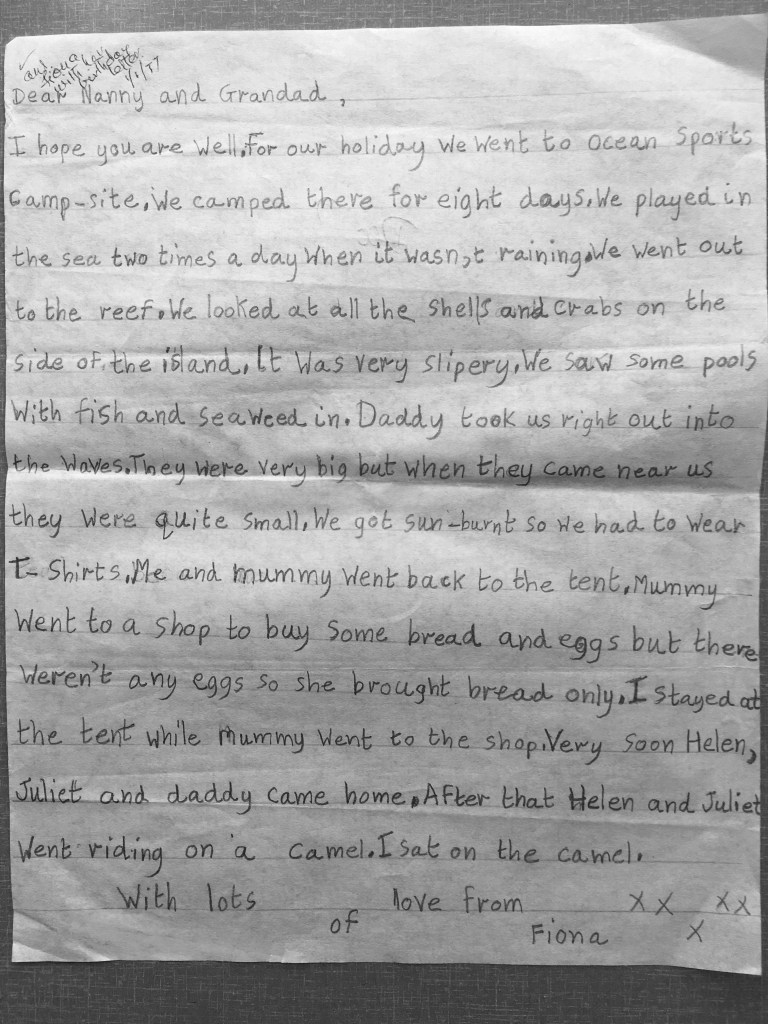
Letter from Juliet to Nanny & Grandad 16 Dec 1976 –
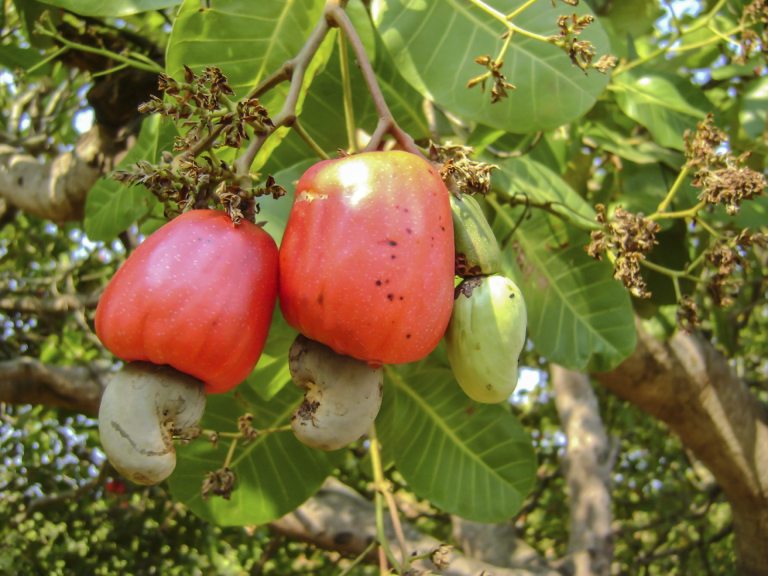
We had to leave Amani Cottage a day earlier because some other people from Alliance came to stay. But this didn’t matter because a friend of Daddy’s had asked us to stay for the night in his home on the coast in an area called Nyali. We left for John Arkle’s in the evening. We passed from the mainland to Mombasa Island on the Likoni Ferry. After travelling through Mombasa which was quite busy we had to cross Nyali Bridge. We had to pay a toll but it was only a small amount. The bridge was very high up and made of metal with a wooden road. The footpath was at the side and away from the road so it looked very scary ! We had no trouble finding John’s house because he had put up lots of signs and had given us directions. His house was a white, quite large bungalow with plenty of space. In the garden he had a large green tent which Helen, Fiona and I slept in. The verandah was very large and had a table which was used for eating, several comfortable chairs and a dinghy. At the sides of the verandah were two white walls with square holes. Through these holes and up the walls grew a lovely green creeper. In some of the holes were a few things that John had collected on the beach such as shells, seeds, pieces if wood that resembled some animal or thing. In a hole at about knee level in front of his chair he had put an old rudder as a table. Hanging from the verandah roof was an old lobster basket and a glass ball used for holding nets up at sea. We spent a very peaceful night and there was a full moon which shone incredibly brightly. We left next morning after breakfast to travel 60 miles to Watamu. Along the first part of the road it was quite industrialised. We passed a cement factory called Baobab Cement. The building was huge with a few large chimneys that gave out a horrible thick white smoke. Surrounding this factory was a quarry. There were lots of signs for hotels because the northern coast of Kenya has beautiful sand and the reef is quite close. They all had lovely names like ‘Whispering Palms’. Soon we were out of this area and we went through green, lush, land covered in all sorts of trees. There were coconut palms that look beautiful in silhouette, baobabs that look like upside-down trees because their roots are thick and their branches thin. At this time of year they have no leaves but huge oval pods measuring about 10″. There were also lots of cashew trees which have bright red pods containing cashew nuts.
While we were driving along we saw a notice saying ‘Gedi National Monuments’ which we had heard was an old town dating back to the 15th Century so we decided to go and have a look. It was ruins of an Arab-African town. The town had two parts, one of which was inside an old town wall and the other inside a newer town wall. The original town covered about 45 acres and in this area we saw the remains of a palace, a large mosque, three tombs, and four small mosques. There were also many houses, some without names and some with names such as ‘The House of the Iron Lamp’ and ‘The House of the Scissors’. In these houses were found their namesake. Between the inner and outer wall there were no houses, only one mosque. At all the mosques were large, well-made wells all of which were still in good condition. As we left we bought a guidebook to Gedi as a souvenir instead of a postcard. It did not take long to get to where we were staying on a campsite belonging to Ocean Sports, a hotel just along the bay from the campsite. We were the only ones camping there at first but towards the end of our stay many more people arrived. We could only swim at high tide so at low tide we went to play in the sand making rivers. We all got very sunburnt and started to peel on our backs so even when we were swimming we had to wear shirts. One day I saw a man on a camel so I went to ask him if he gave rides. I found out that he charged 5/- for quite a long ride so the next day Helen and I went on it together because there was a seat for two. The camel was short-haired and had one hump. As I was getting on it looked at me as if I was a piece of dirt. As soon as we were on its back legs rose awkwardly and then its front legs. It was incredibly high up and quite scary but it moved very smoothly in a rolling sort of way. Now I know why camels are called ‘ships of the desert’ ! It was a lovely ride and we were taken right back to our tent. It was a pity we didn’t have our camera. Fiona had a go sitting on the camel while it was sitting down because we thought she might be rather scared. We went for a meal at Ocean Sports. Mummy and Daddy ordered crab and we had fish and chips. When the crab came it was most astonishing – they were enormous ! It was a very nice meal and we all had a taste of the crab. We saw someone else have a lobster and that was even bigger. Its antennae were about 1.5 ft long. Another day we walked out to the reef which was fairly close. We walked to the waves on the reef which were huge but by the time they got to us they had practically vanished. We saw lots of colourful corals and in pools there were lots of turquoise and black and white zebra fish. We also saw a large green and red fish. Two days before we left we found a log from a coconut palm and at high tide we played boats with it because it floated. The only trouble was that it was very hard to balance. There was a place on the beach next to the island where a part of the over-hang had fallen off leaving a kind of crevasse. It was great fun playing in this while the tide poured its waves into it. On the way back to Kikuyu we stopped in Mombasa because we wanted to buy some souvenirs because this was probably the last time we were going to be in Mombasa. We each bought a shell and a postcard. Helen and I bought a shell called a Bull-Mouthed Helmet which is too hard to describe so I will show you it when I get home. Fiona bought a large Tiger Cowrie. We travelled home at night and camped over part of the night. In the morning we saw a lone elephant lumbering along.
Letter from Graham to David 16 Dec 1976 –
Judy and the children travelled to Mombasa on an overnight train with sleeping accommodation. It takes about 14 hours for the 300 mile journey – an average speed of about 21mph. The engines are strong enough but the terrain is difficult and the railway was built at the turn of the century with a minimum cost. Hence there are many tight bends and steep gradients.
Letter from Graham to Diane & Sydney 16 Dec 1976 –
Judy and I had a meal of crab in a beach hotel – something new for me. It was extra nice for us because we were living on camping food with no fresh meat or vegetables available.

 Juliet's Kenya Days blog