Diary entry by Juliet 29 Aug 1975 –
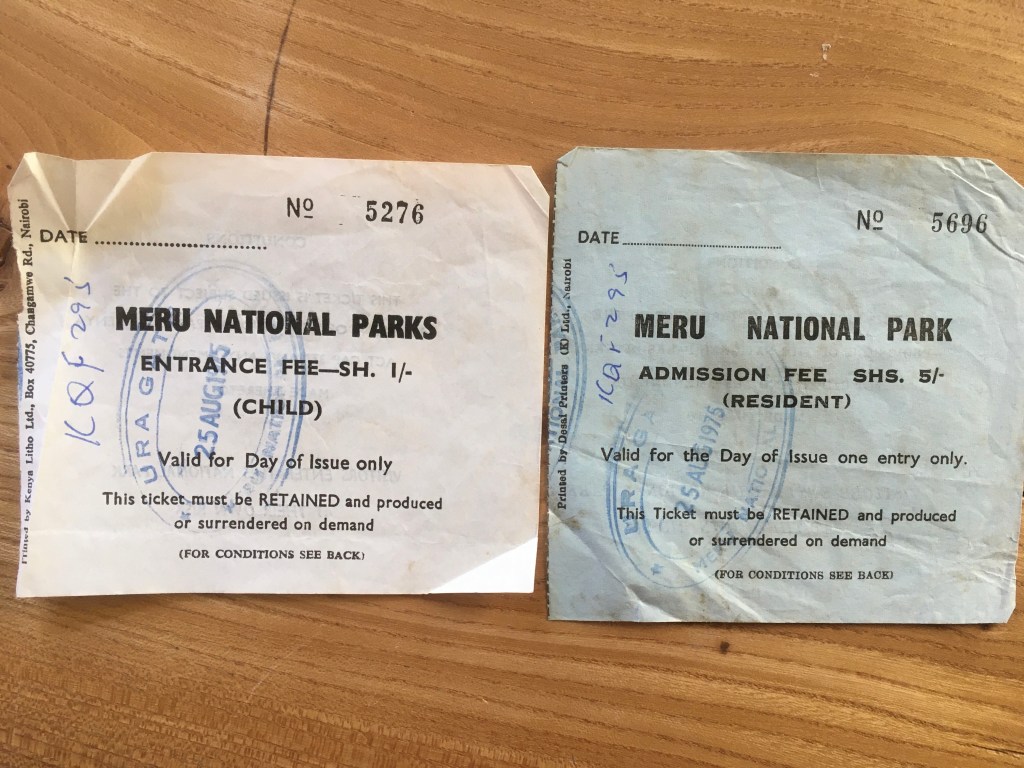
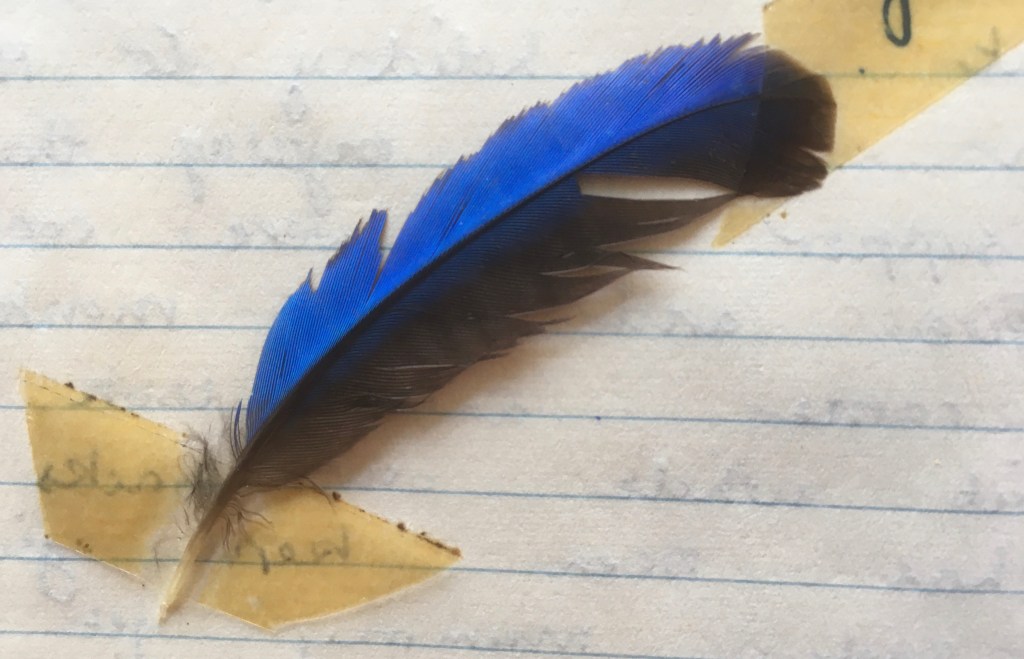
It is now the school holidays (we go back on 9th Sept) and I am sitting by a camp fire now in a campsite in Meru National Park. It is great up here. It’s the evening and the insects are singing, the fire is crackling and the wind blowing in the trees. It’s a super campsite beside a dried up river where lots of vervet monkeys play. This is our third night here and it has been very hot. Mummy is in her bikini now. It has been clear every night and I have been able to see the Milky Way and billions of other stars. We are NE of Mt Kenya although we haven’t seen it. On the journey from Nairobi we had trouble with the van – it was the points. Luckily it happened in Embu quite a big town. Before supper we were cooking potatoes in the fire and a monkey that I named Kiki (who had a big mole on the side of his lip) came and took one out and ate it while our backs were turned. The fire has been kept going ever since we arrived. This morning when I woke up I looked out of the window (Helen and I sleep in the van) and I saw lots of monkeys around a plastic bag. I rushed out with just a towel around me and frightened them away – Kiki rushed up a tree. They had been picking at empty tins. We saw lots and lots of kingfishers by our camp and I found a feather.
Letter from Juliet to Grandma & Grandad 4 Sept 1975 –
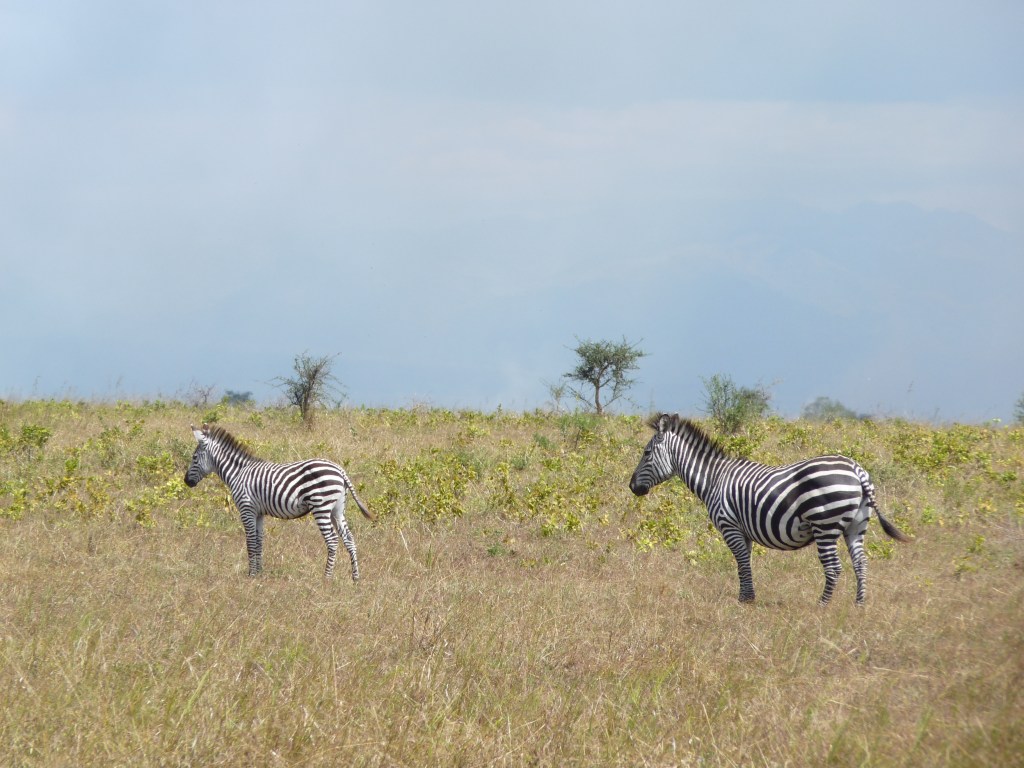
Meru Park was very large and also very pretty and very hot. We did not realise it would be so hot and Mummy had packed trousers and anoraks, but luckily also frocks and shorts. We saw three white rhinos out for a walk with two rangers. They came past our camp and one started coming towards us so one of the rangers shouted ‘kwenda!’ (go!) and the rhinos turned quickly and went. They must have been really tame. Later in the holiday we saw them again with tourists pulling their tails while they ate! The land around us was very changeable; sometimes you were on rolling golden plains, sometimes in dense green or grey bush land; whatever it was you could find animals and birds. There were lots of small rivers with fords. At these rivers we often found elephants. On ridges we found all sorts of animals but not elephants. On the plains with bushes we saw a lioness with a rhino, and on the way back to camp from there we saw two cheetahs. We often saw zebra, waterbuck, impala, ostrich, baboons and giraffes. The giraffes were reticulated which means the patterns on their skin are close together.
Letter from Judy to Nanny & Grandad 4 Sept 1975 –
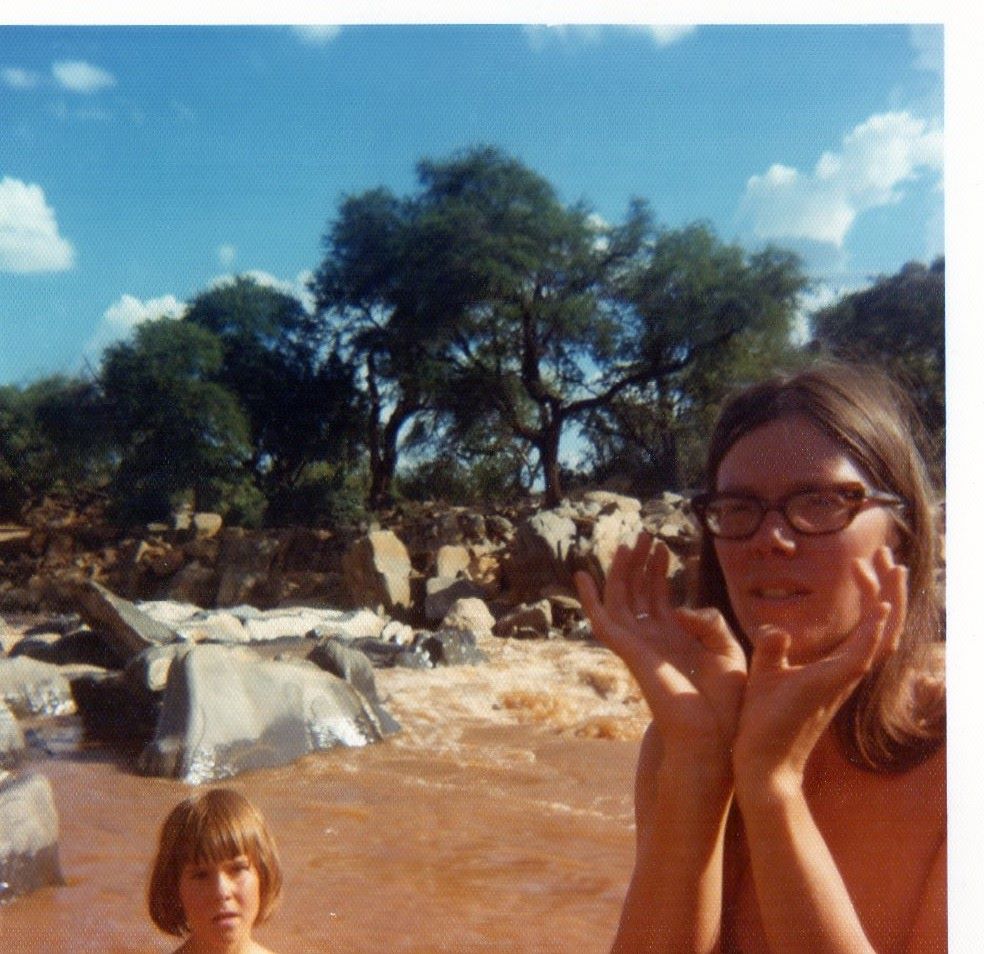
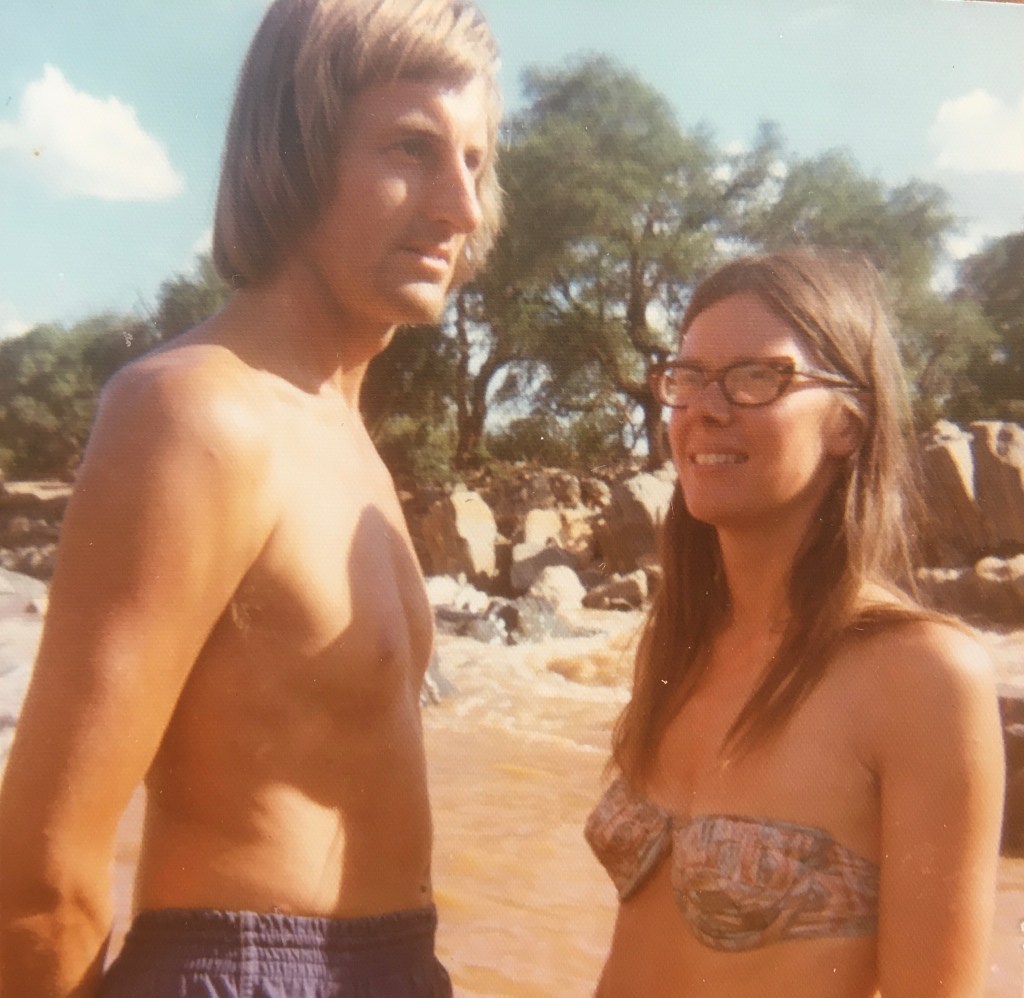
We spent the last week in August up at Meru National Park which is about 60 miles east of Mt Kenya, almost on the equator. We decided to go there because it is warm and sunny at this time of year with temperatures in the upper 80s and 90s. It certainly was an excellent choice and it was lovely to be able to get into a bikini and need no bedding at night. We found we very quickly acclimatised to the heat mainly because it is a very dry heat and there was always a pleasant breeze. We found a shady campsite quite near the shower and toilet – there are 4 sites in the official camping area all with their own tap and woodpile and we had it to ourselves all week; there was no differentiation between campsite and park and we had elephant, buffalo, rhino and various deer all within a few yards at times. We decided that the animals that tend to stay near an inhabited area were probably old or segregated ones who use the proximity of people as protection – certainly they seemed very docile – Graham walked into a pair of elderly buffalo one night and he said they grunted and stamped to let him know they were there but seemed quite unalarmed. We soon learned to wake up every hour or so to feed the fire without it disturbing our sleep much. The stars and moon were spectacular because of the clear skies. We were camped near the area used by the white rhinos that they are trying to get established in the park and saw them most days, often accompanied by their rangers. They are expecting a baby and being given extra care I think. They were very tame but I believe there are a few others already established who lead a much wilder life. In fact, they are very like ordinary rhino except for the wider mouth so it’s difficult to distinguish them except at close quarters. The animals in this park are much wilder than at the longer established parks so it was necessary to take a lot of care approaching them and we had our usual alarms with aggressive elephants. On two occasions we met enormous herds of buffalo (we estimated at least a thousand in one herd) and had to wait over half an hour for one herd to cross the road before we could continue. We managed to break our radiator by a stone being thrown onto it by the fan; a chance in a million I should think. It probably happened when we were crossing one of the many fords. It took 2 men 9 hours to mend it at the Park HQ garage but they only charged 150/- which included 30/- for solder. It was no particular hardship to spend a couple of days lounging around at the campsite while it was being done. We drove down to the Tana River which forms the southern boundary of the park one day and saw many crocodiles and hippos. It is very wide and at one point had quite spectacular rapids and falls which were only marred by the muddy colour of the water, though it is caused by sand not mud I think.
We saw several ‘sand rivers’ on the way where any water there was runs underneath a thick layer of sand. We drove down a track to the edge of a river and got the minibus well and truly stuck in a patch of soft sand. We were glad we had all our gear and food and water in the minibus as we didn’t manage to extricate ourselves until next morning by great engineering works using the carpets from the van and some palm fronds as a solid base for the wheels to drive on. We mended an existing thorn enclosure and kept up a big fire and spent a comfortable night only disturbed by the honking of hippos as they came out of the river to feed all around us. We thought we might be disturbed by big cats but heard nothing near us at all and in any case the children were sleeping in the van as usual so they were able to look on it as a great adventure ! No-one noticed our absence from the campsite for a night and one could obviously be missing for several days before any search party was sent out – the obvious moral being to be self-contained and resourceful.
Letter from Helen to Grandma & Grandad Aug 1975 –
One day we were out for a drive and we went through a drift we must have gone over a big stone or something because we stopped quite soon and dad got out to look at the engine we found all the water had come out of the radiator so we got a bit of chewing gum that we luckily had with us and put in some water that we had in a water carrier we borrowed but it still leaked a lot after a while it stopped again so we put more water in, just then we noticed something moving in the bush it was a rhino (not a white one) chasing a lioness ! then they disappeared we decided to roll to the next drift then we got water and quickly drove to the Meru headquarters where we hoped that they could mend it they tried lots of things that took more than one hour they did quite a lot but it still leaks even now ! On the way back home we saw two cheetahs for about five minutes then they were gone. Another time we were driving along the bank of the river Tana and we saw three baby crocodiles and about two big crocodiles then we drove along a sand road and we got stuck it was a very nice picnic site then we tryed to get the van out of the sand but couldn’t so we had a cup of tea and had our supper for the night mum and dad slept in a thorn enclosure and us three slept in the van (it was lucky we had a big van because we had our food and sleeping bags), In the morning Juliet went to get water from the river and a crocodile swam up and she ran. We got out after a lot of pushing.
Diary entry by Juliet 9 Sept 1975 – describing being stuck beside the river:
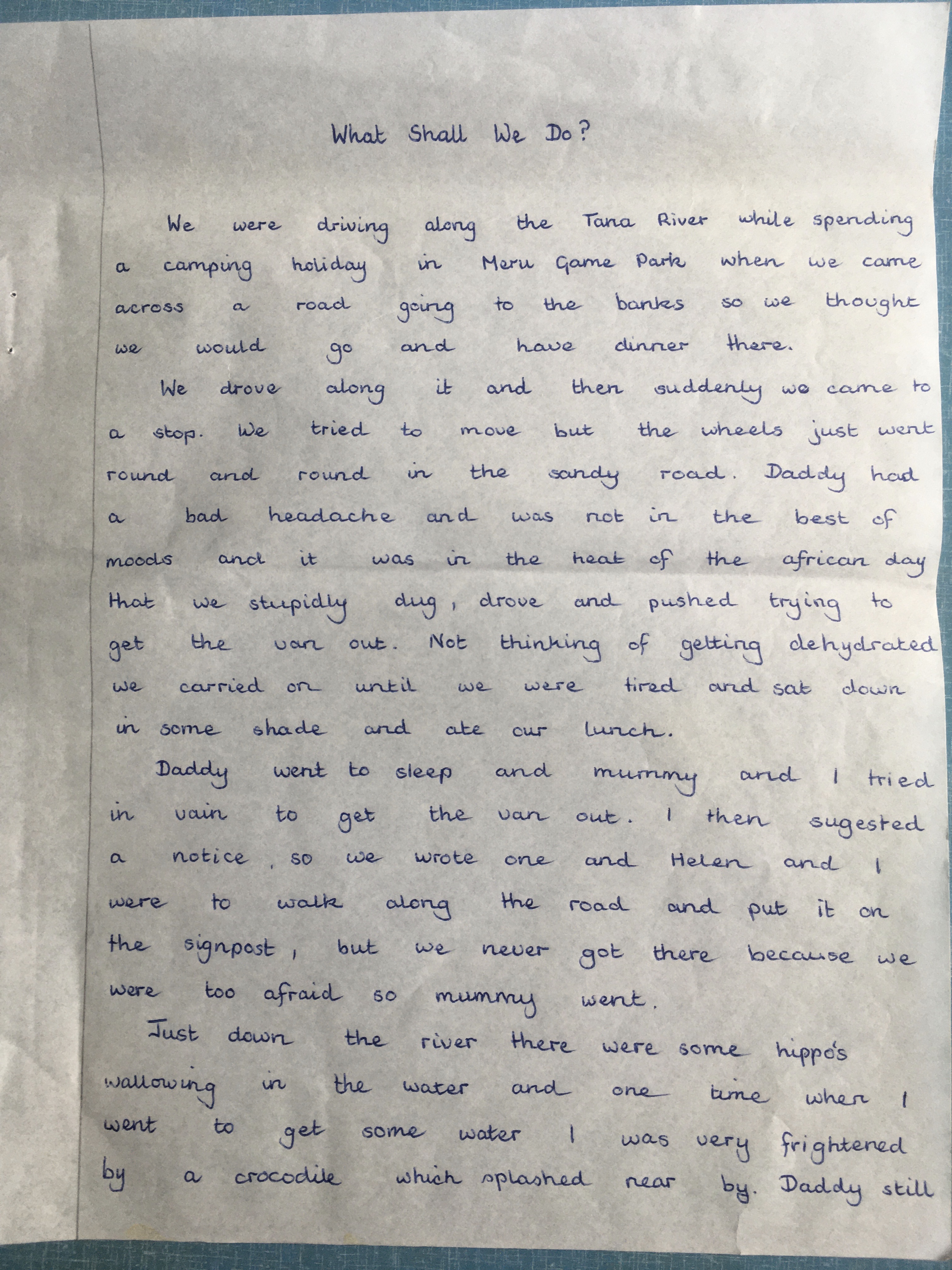
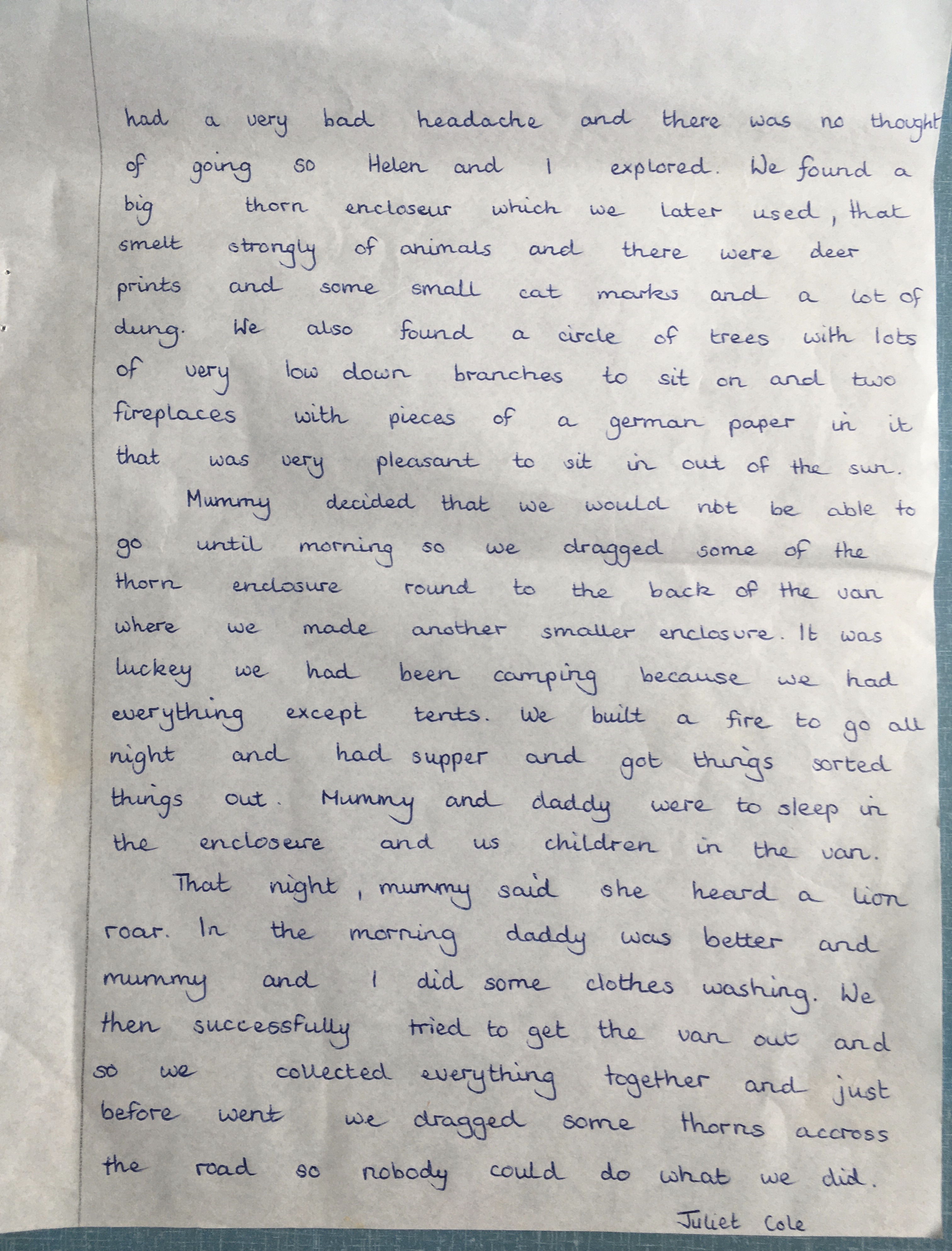
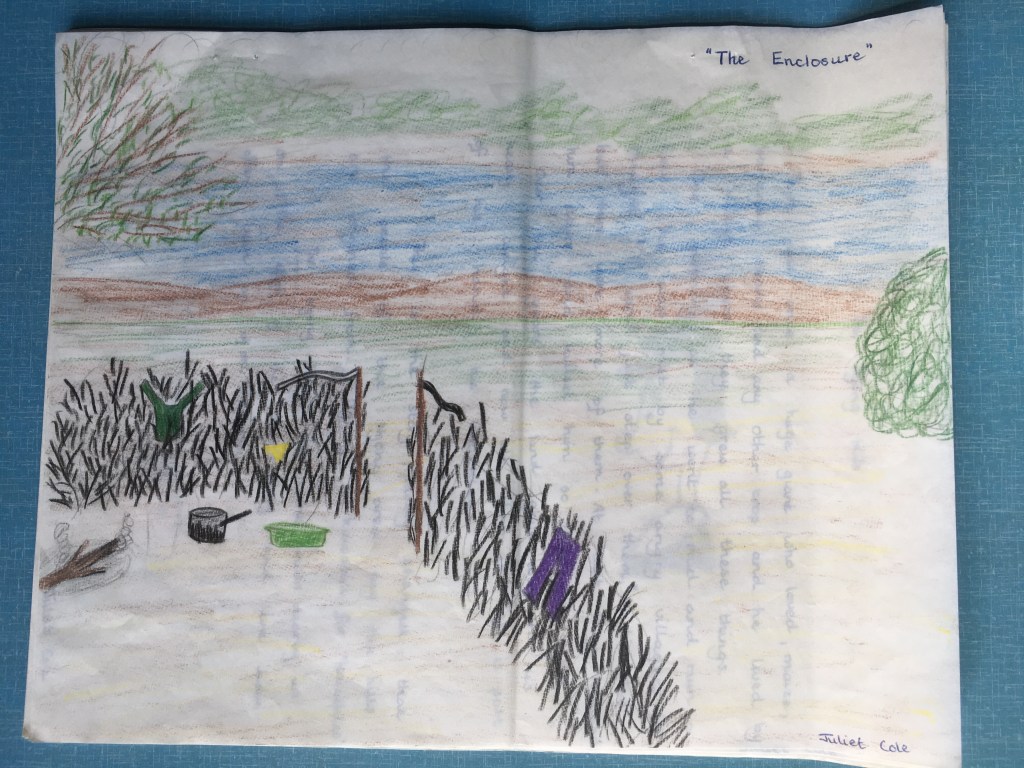
While Mummy was making some lunch after we got stuck we explored. We found a big thorn enclosure beside a group of trees with cat prints, a smell of buck and two large piles of ash inside the enclosure. We also found a tree house up a tree impossible to climb. This area, although next to a river, was very dry with dense grey thorn bushes. After lunch we tried again to get the van out but the wheels just got buried in sand so after a lot of heaving and pushing we gave up as we were hot and tired and Daddy got a bad migraine. We were lucky because we had brought all our food, cutlery and crockery and a big container of water which we boiled and drank. The river water was very muddy. After tea we tried to get the van out again but failed so decided to stay put as Daddy was really not well. Mummy and I dragged some of the thorns from the enclosure to the end of the van and made a smaller enclosure around it. Then we built a fire and collected some huge logs to burn through the night and made a hot drink and sorted out the bedding.
Although neither Juliet nor Judy mention it in their writing, Helen & Juliet remember there being a plan after lunch for them to walk back down the track towards the ‘main road’ to leave a sign saying ‘please help’ but not actually getting far out of sight of the minibus before getting spooked and running back! Judy remembers that she wasn’t cross about this failure, but that she then took the note and left it at the big (not very!) road. Judy says ‘I remember vividly walking the 1/4 mile or so through the bush. I knew logically the danger from animals was remote but in all that immensity of space and quiet I felt very small and alone. It was still there when we left the next morning. No one had passed as we could tell from lack of tyre marks. Another thing I remember is Juliet and I working out a system whereby we could filter the river water through a cloth (handkerchief/pillowcase, can’t remember) if we were still stuck after our drinking water ran out. We had plenty of food but water would soon be a problem. Fortunately we didn’t need to put the plan into action as a fresh approach to the stuck van the next morning soon solved the problem.
Juliet also made a later diary note on 6 Dec 1975: I’m not the best diary keeper I’ve ever known. I never did end the tale of when we got stuck, but this is what I can remember: We all fell asleep soon because we were very tired. In the morning Mummy said she thought she had heard a lion roaring in the night but she wasn’t sure. We woke up to the honking of hippos, a lovely sound. After some breakfast we washed some clothes and while they were drying Mummy found a case full of my clothes so we all went around wearing my clothes except for Daddy. On one day we travelled to a large river called the Tana River. It is one of the only rivers that flows to reach the coast from the desert. We passed through grey bushland and saw lots of slender gerenuks, also a few elephants, waterbuck and lots of hornbills. At the river we saw lots of hippos and crocs. We also saw lots of kingfishers that had homes in the banks of the river. They weren’t very pretty, but we saw some lovely bright kingfishers at our camp and I found this feather which we think could have been a kingfisher’s.
Letter from Judy to Nanny & Grandad 4 Sept 1975 –
We came home round the north of Mt Kenya which is a good tarmac road all the way and involved climbing 6000ft from the park. There were stupendous views north over the desert but the near view was of rolling corn fields at that time in the process of being harvested. We saw 6 combine harvesters working in a line just like the pictures of the American prairies – it was a real contrast to the semi-desert, bushland and shambas we are used to seeing.
A tale called ‘What Shall We Do?’ written by Juliet and put in the book we created for Grandma & Grandad for Christmas 1975 –

 Juliet's Kenya Days blog