Letter from Graham to Simon and Pat 16 Feb 1975 –
Today I went for a long walk and discovered a small village where the inhabitants were Moslems and spoke the language of the coast people 300 miles away. They were local tribesmen who had presumably been converted by traders from the coast. This is a crowded part of the country and some people have very little to live on.
Letter from Judy to Nanny & Grandad 18 Feb 1975 –
On Saturday Graham went with Hudson, our gardener, to see his family and farm. Graham said it was about half an hour’s walk away and seemed a very small plot of land for the four families that lived on it. There is no water for more than half a mile and they have to buy it and take it in turns to take in drums by donkey cart. There seems to be a theory that this area has been getting drier over the last 20 years. When Graham got back his legs were red with dust right up to the knees from walking on dirt paths.
Diary entry by Juliet 27 Feb 1975 –
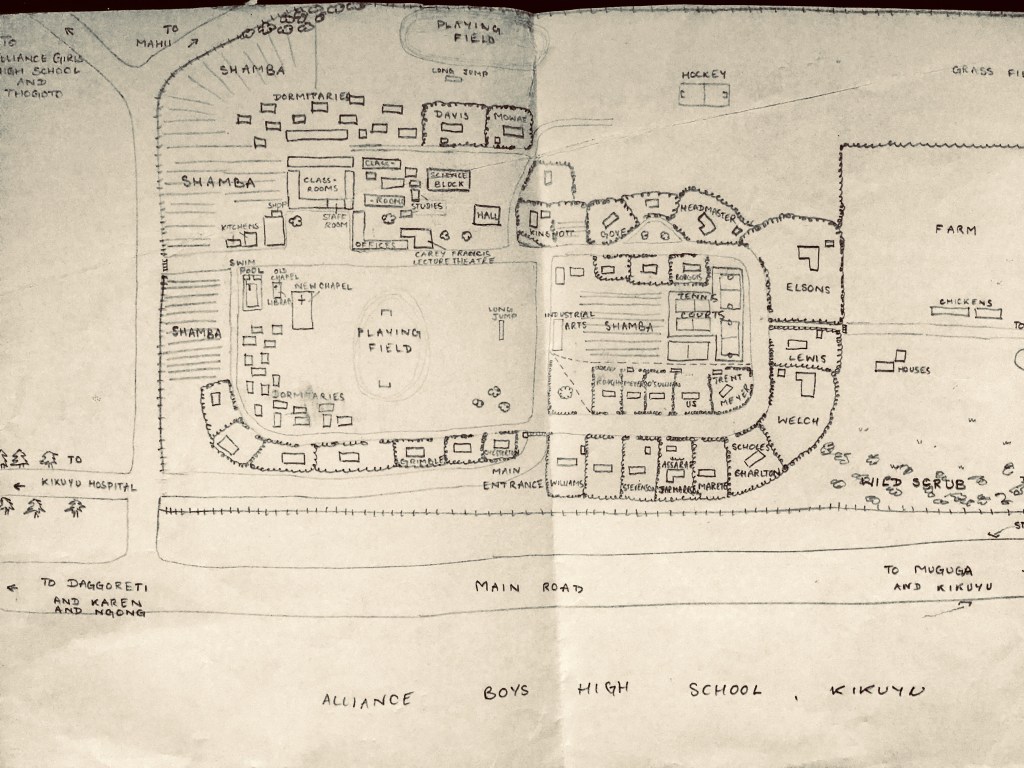
This morning Daddy and I walked up to Kikuyu village. It is quite big and all the houses are small and dark. We bought some wood to make shelves. On the way back we went the swamp way. The ground sank under you and it was very pongy.
Letter from Judy to Nanny & Grandad 3 Mar 1975 –
Yesterday the children went for a walk into the country nearby and brought back some lovely bulrushes and a porcupine quill. Graham went off on a long walk with Mike Mowatt and managed to reach a high point where they could see over the Rift Valley. They met an old boy of the school who invited them back to his hut where they consumed fermented porridge (a common native dish!). Apart from Graham getting stung on the eyelid by a hornet a good time was had by all !
Letter from Graham to Grandma & Grandad 1 June 1975 –
Kikuyu town looks rather like something from a film of the Wild West. Mud (or dust) roads with small shops, often with raised verandahs. One main difference is that most of Kikuyu is much shabbier than the Wild West towns of the films. Also there are no horses, though lucky people have cars. Most people walk and we quickly got used to seeing lots of people walking along all roads wherever we go. There are buses of course, and ‘matatus’ which are taxis which fill up with extra passengers as they go along so they are fairly cheap. They are usually small vans with side windows but some are minibuses. Hence I often get waved at as I drive along – people hoping I will take them in my matatu.
Letter from Graham to David 26 June 1975 –
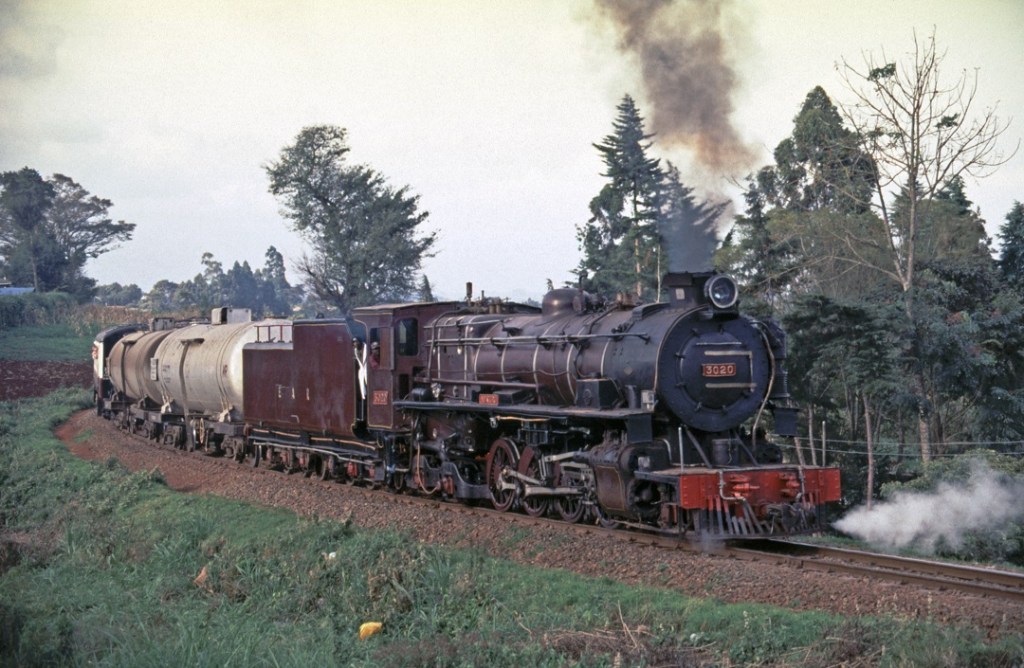
Kikuyu is on the railway which runs from the coast to Uganda and Lake Victoria and many of the trains are pulled by steam engines. We often hear them from our house. Nowadays they are fuelled by crude oil but previously I expect they used wood. We were surprised to see steel sleepers on the line – they are obviously imported and much more expensive than wood. The reason is that white termites would eat wooden sleepers !
Letter from Judy to Jo 6 Dec 1975 –
The other afternoon I took the children to visit the home of one of the school nightwatchmen. He lives about 1 mile from the school on a smallish shamba which he shares with his seven brothers and their families. The land was quite good when his parents first settled on it in 1960 but it is now over-used and getting drier and more eroded every year. Makuwa is an intelligent man and understands the problems but there’s not much he can do about it. Because he has a job he is trying to save up for a share in a co-operative farm in a less crowded part of Kikuyuland, but most of his brothers haven’t a hope of ever earning any money, so have no hope of moving off their shamba. They grow potatoes, maize and beans; just enough for them to eat, which leaves them with nothing to sell – they have enough grass for one cow which gives them 3 bottles of milk a day but they have to buy every drop of water they use at 50 cents (about 3p) for 4 gallons and they have to carry it half a mile on their donkey cart. They think they are lucky to have a donkey – most people carry it. We visited Makuwa’s mother’s hut which is an old-fashioned round Kikuyu hut with mud walls and thatched roof – then had food and drink in Makuwa’s hut which is the modern rectangular style, still with mud walls but roofed in corrugated iron sheets and lined with cardboard boxes flattened out. The children nobly ploughed through enormous bowls full of a mixture of rice and potatoes which was very tasty but exceedingly filling ! And large enamel mugs of very hot, sweet, milky tea. It was probably more than most of the kids on the shamba see in a week but that’s the custom and they’d have been insulted if we hadn’t accepted it.
Letter from Juliet to Grandma & Grandad 17 Dec 1975 –
We were shown all around Makuwa’s shamba. He grows beans, potatoes, maize, bananas, custard apples, peppers, cabbages, sweet potatoes, cassava, and lots of other crops. There were lots of little children all over the place and Fiona had taken her little fat doll that you had knitted for me and when we left we gave it to the baby. He was delighted as he had never seen such a thing before. We also gave them some toffees.
Letter from Helen to Grandma & Grandad 15 July 1976 –
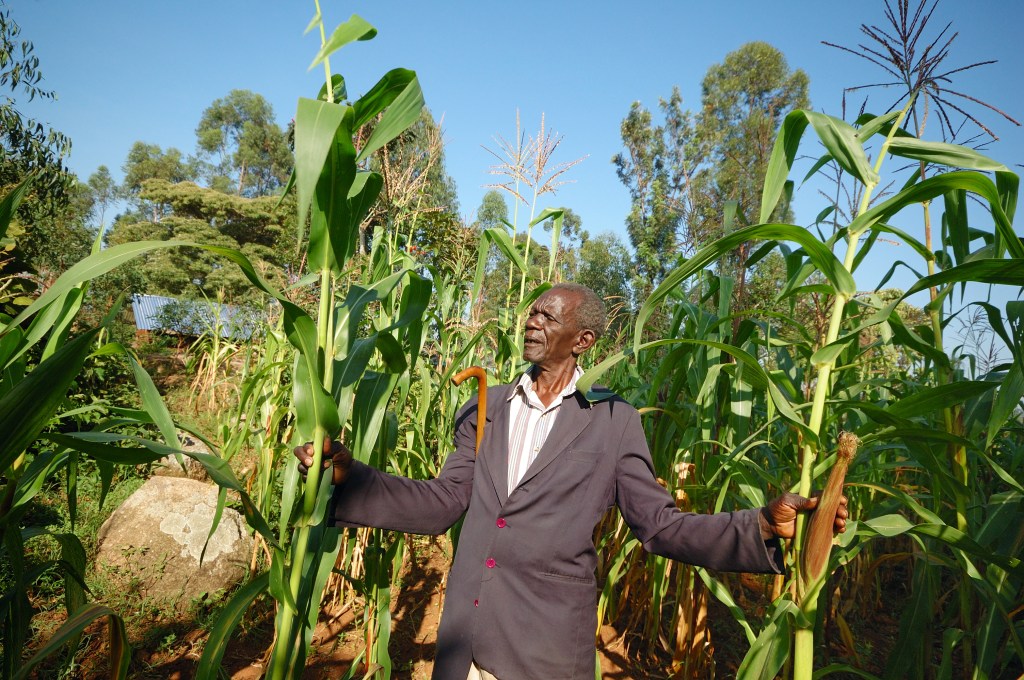
Last Sunday we went to Lawrence’s (our milkman) house and had lunch there. It was potato and maize (corn) and a drink of milk. Then we had a soft boiled egg. Later we had more milk and bread and butter. We gave his children a ride in the van which they enjoyed a lot.
Letter from Judy to Caroline & Martin 20 July 1976 –
Makuwa has just brought us a gift of potatoes – he seems his usual self – his wife had her baby at Kenyatta Hospital and was there 21 days but now she and the baby (a boy) are home and fine. We visited Lawrence the other Sunday after he’d been asking us for a year – he now has a very substantial stone-built house not far from Makuwa.

 Juliet's Kenya Days blog